Enterprise marketing operations are a case in point when it comes to paradoxes. The rise of video as the keystone of customer interactions—product demonstrations, customer testimonials, training content, and internal communication—has further intensified production issues. For instance, a Fortune 500 company may need hundreds of videos per year across its various units, territories, and customer segments.
Therefore, movement to the central team only generates friction: business units may wait weeks for production, creativity is filtered through the production team, and costs soar as every video requires dedicated manpower and equipment.
This is where advanced artificial intelligence-based video technologies present an opportunity: to maintain the balance between centralized creativity and distributed video production without compromising quality.

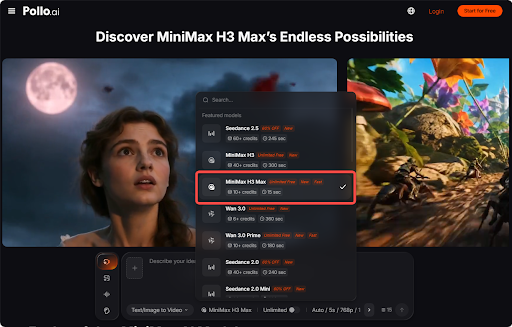
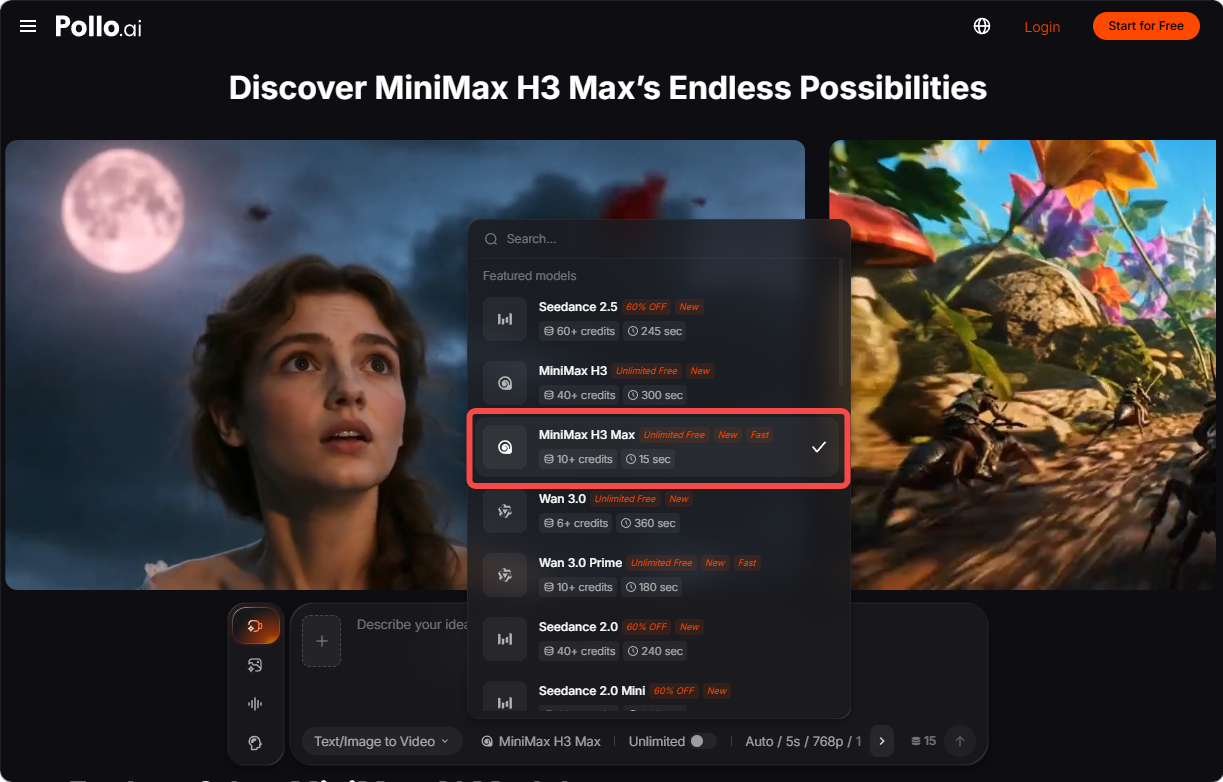
The Function of MiniMax H3 Max on Pollo AI
The function of MiniMax H3 Max on Pollo AI is achieved through the combination of three important factors. The first factor is that the model can interpret complex creative briefs. Therefore, business departments can specify their requests without relying on production specialists to interpret them. The second element is that the model allows people to very quickly. As a result, whole teams can create videos without spending months and a lot of money preparation. The third aspect is that the model can take images and text input, so businesses can create video content but keep the branding visuals.
This method is essential in large-scale business processes. The companies do not require the different groups to monitor the brand standards on their own as they use uniform templates, guidelines, and systems for video generation created by the companies.
How to Implement Video Generation in Business
In order to implement AI video generation successfully, one should go beyond the use of the tools and redesign the organization. The most effective way of doing so is to see the technology as just another part of the content creation system.
Step One: Create an Organizational Standard for How Video Will Look & Be Produced
Establish a central set of creative standards (i.e. branding, messaging, etc.) as well as template-based production systems.
The use of these standards and systems will allow individual departments to produce high-quality video in a timely manner while meeting the organization’s branding guidelines.
A standardized approach provides several benefits: increased consistency in branding and messaging; decreased decision-making load at the departmental level; and greater speed in developing new video content due to the availability of pre-defined creative direction.
Step Two: Distribute Capability While Maintaining Oversight
Instead of putting all video production efforts into a particular team, enable departments in the company to generate videos independently, but establish central review functions.
Ensure that there is sufficient training on using the MiniMax H3 Max in Pollo AI and interpreting creative briefs, as well as training about brand standards.
Establish an approval framework that allows for quick feedback and review but does not hinder the workflow.
The purpose is to bring forth business units’ capability to generate their own videos while being consistent with the organizations’ standards. It requires both good governance and liberty.
The majority of companies observe that video content creation requires revisions in only 10% of the cases; therefore, the challenge is to create an approach that would take care of it without slowing down the overall workflow.
Step Three: Set up Learning Systems
Once people in different departments start generating videos, it is important to accumulate the knowledge about the strategies that are working.
Which creative solutions attract people the most?
What messages have the strongest impact on the audience?
What the best visuals?
This learn function is important for permanent success. Companies that view video production as a static skill will experience diminishing results as the novelty decreases. Companies that continuously work on their methods based on performance statistics will succeed in achieving their goals over time.
Step four: Create Sustainable Governance
As video production widens in the company, introduce clear governance related to access to tools, budgetary distribution and industry standards.
Which business units can use video production tools?
How will the expenses be distributed?
Who is to assess the quality of the created video?
These issues have no set answers; they depend on the company’s structure and culture.
Infrastructure Support: Achieving Quality at Scale
As video production continues to expand within your company, it is important to keep track of the quality of input materials. Each unit within a company might have its own criteria in terms of photos taken of products, branding, and reference materials. Implementing consistent standards across the board is a serious obstacle.
For this purpose, Pollo AI’s Instantly Unblur Photo Online Free application offers an effective solution. By assuring the quality of images used in the process of video production, the initiation of the production itself can be accomplished using input materials of a constant quality regardless of the department producing the materials.

Measuring the Impact of Enterprise Video Production
The success of enterprise video generation relies on the ability of an organization to measure the performance of those videos accurately.
Metrics such as audience engagement, conversion rate, viewer retention, the growth of viewer base, and other specific metrics must be established beforehand. The organization must measure how those metrics fare across its various videos, business sectors, and video genres.
These metrics should be used to improve one’s video production strategies.
For example, which types of videos are shown to be most engaging? Which departments in the organization generate the most effective video? What creative techniques produce the best results?
These findings can be incorporated to improve video templates and train the departments that lag behind.
Most businesses find that measuring video-fueled operations produces some unexpected results. For instance, there might be a department whose videos are being perceived as of an inferior quality while, at the same time, their videos perform better with the audience than those of other departments.
Also, some videos that universally work best for a specific type of audience may actually turn out to be more efficient with some audiences than others. So using the data obtained through video production analysis normally allows organizations to boost their overall video production performance.
Conclusion: Enterprise Plus Distributed Production
Transitioning from centralized video production to distributed generation with centralized management leads to significant changes in the work of large corporations.
The organizations achieve substantial benefits such as reduced operational costs, reduced time of producing videos, and increased flexibility of the organization.
The time is about to change as organizations used to need huge teams, which took a lot of time and resources to manage production, while now AI has made it possible for each part of the organization to produce quality videos.
Organizations that anticipate this shift get opportunities to adapt more quickly to changing conditions while benefiting from that even before the majority of organizations will manage to adjust.
Join The Discussion: